San Juan
Photos: Darío Alpern (CC BY-SA 3.0) — via Wikimedia Commons
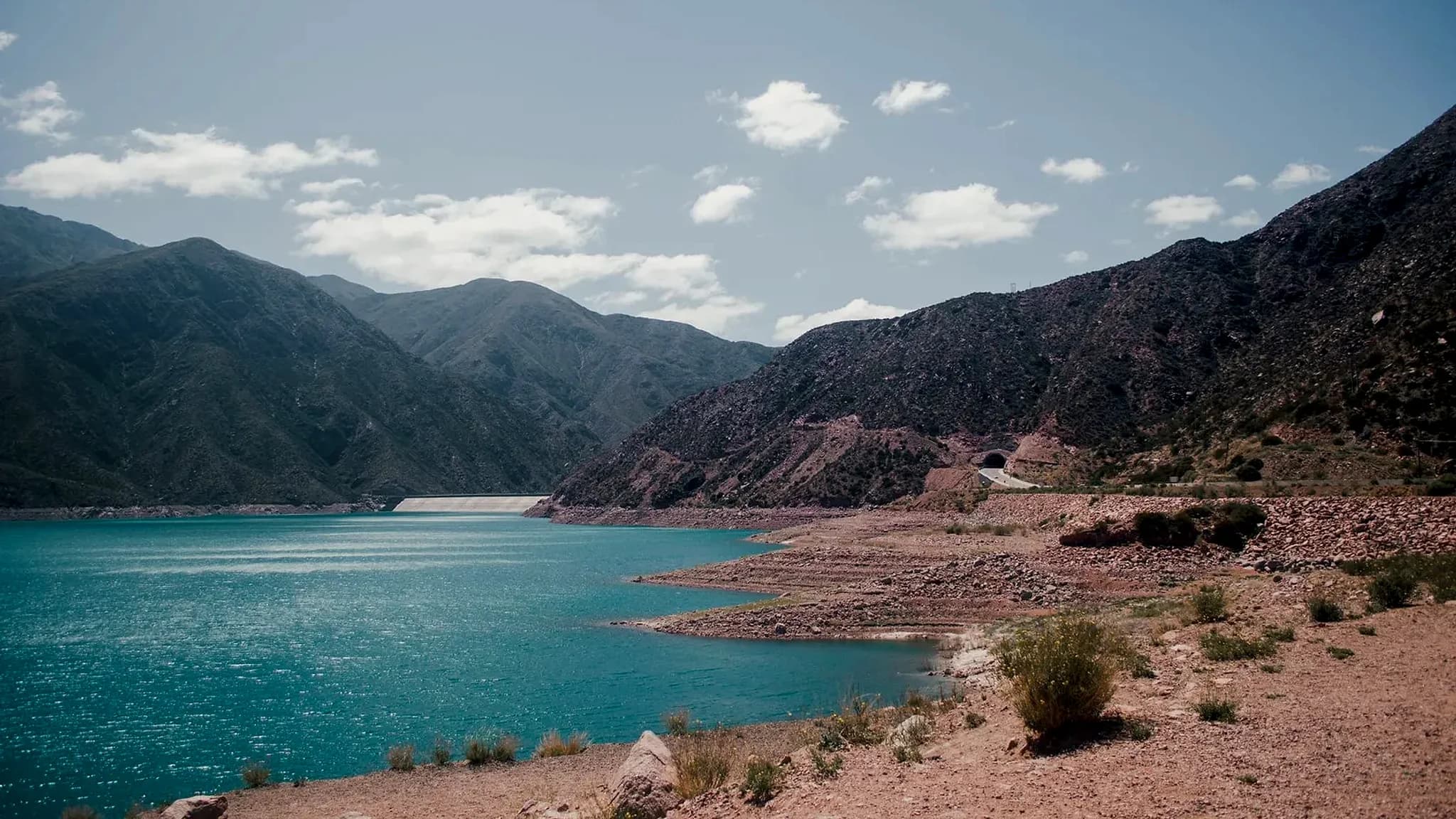
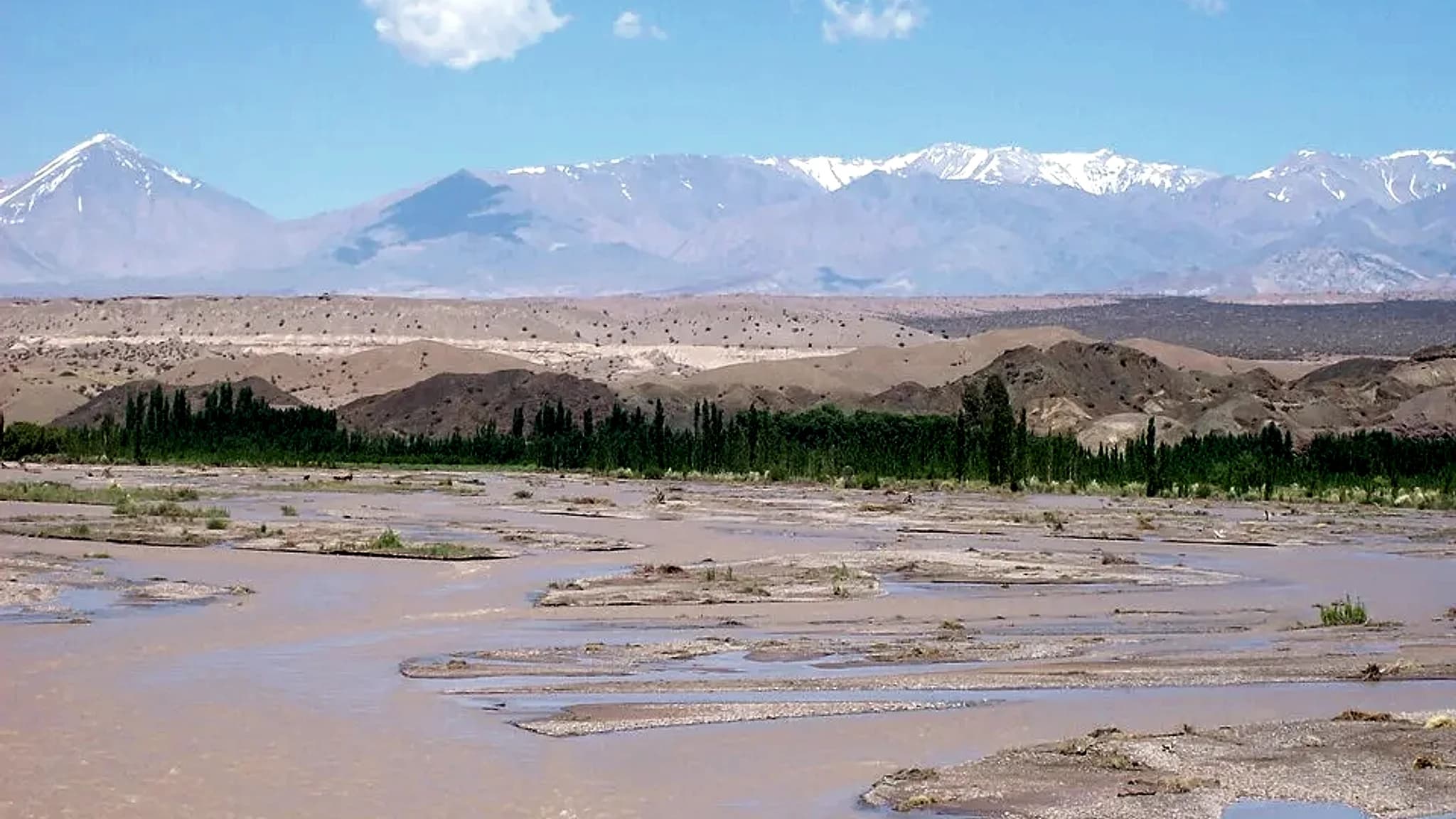
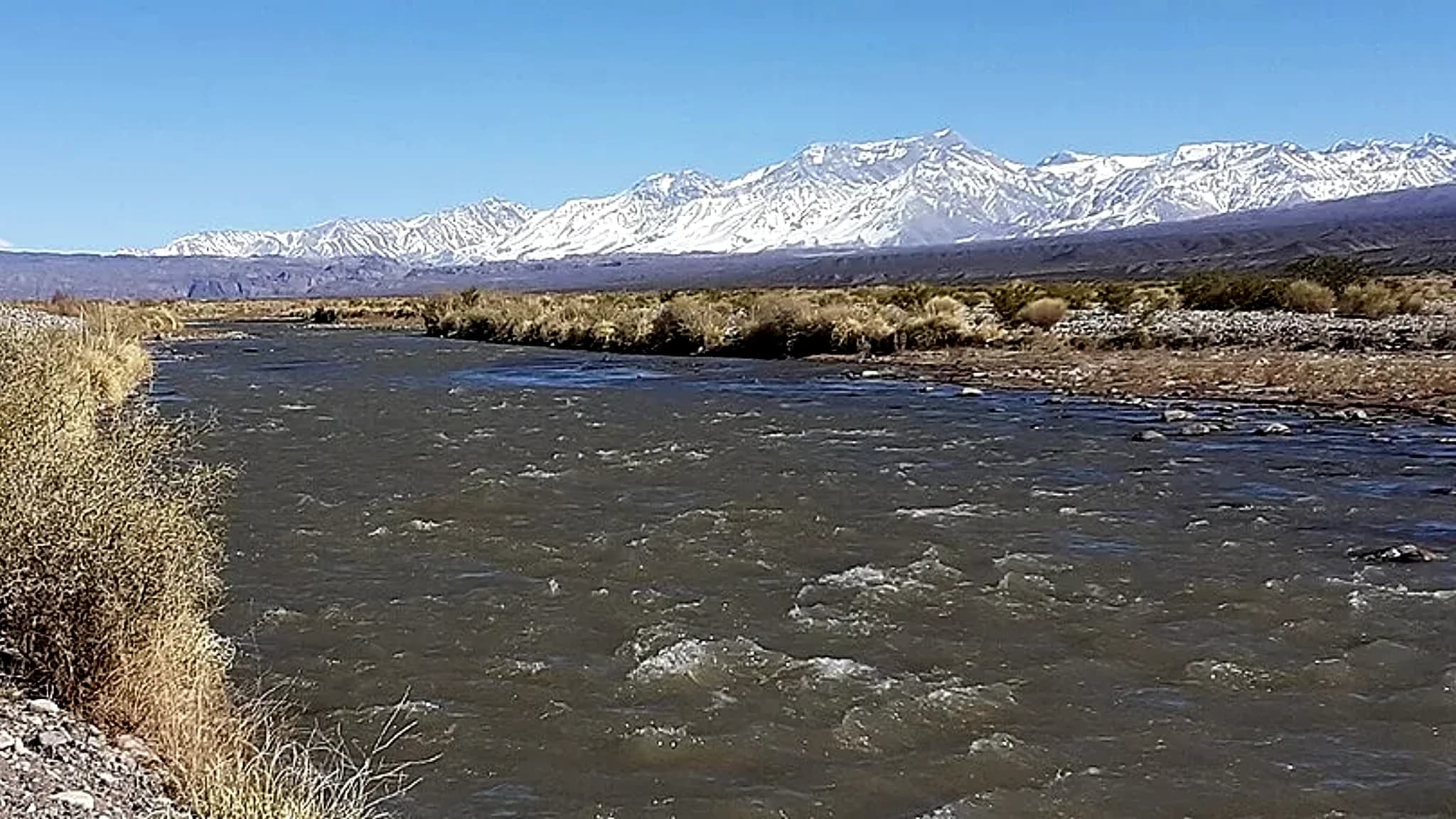
El gran río que le da nombre a la provincia: baja de la cordillera, se remansa en el embalse de Ullum y sigue hacia el valle entre paredones áridos y cielo limpio. En sus aguas frías y correntosas de deshielo viven la trucha arcoíris, la marrón y la de arroyo, refugiadas en los tramos más frescos.
Se la busca con mosca y con spinning: ninfas y streamers en los pozones y los veriles, secas cuando hay actividad en superficie, y cucharitas o pequeños minnows trabajados en las correderas. La trucha marrón, más desconfiada, premia al que trabaja fino y busca los reparos; la de arroyo aparece en los tramos altos y cristalinos. En términos generales, el río rinde mejor cuando el caudal de deshielo baja y aclara, hacia el otoño y el arranque de la primavera. Pesca de agua fría, corriente firme y paisaje de montaña pelada.
Sector 1, del nacimiento (unión del Castaño con Los Patos) al Puente Ingeniero Suárez o de Pachaco: habilitado todo el año; extracción del 1 de noviembre al 30 de abril de 1 trucha por pescador y por día, sin acopio, de tamaño NO MAYOR a 25 cm, y el resto del año con DEVOLUCIÓN OBLIGATORIA. Sector 2, del Puente Ingeniero Suárez al Dique Caracoles: VEDADO todo el año. Aguas abajo del Dique Caracoles el río queda vedado por la regla de cierre del art. 36. Res. 956-SEAyDS-2025 (San Juan), Anexo I art. 36 incisos B y C.
At Río San Juan you can catch Brook trout, Brown trout, Rainbow trout.
Original text in Spanish: “Se accede por la zona de Ullum y el valle, por caminos que bordean el río; hay tramos cercanos a San Juan capital y otros más agrestes. Conviene consultar localmente los sectores habilitados.”
Original text in Spanish: “Rige el permiso de pesca de la provincia de San Juan: verificá el reglamento vigente, la temporada y los tramos donde está permitido antes de salir.”
Now 18° · wind 6 km/h SW
Base data: Wikidata (CC0)
| Season | JAN | FEB | MAR | APR | MAY | JUN | JUL | AUG | SEP | OCT | NOV | DEC | NOW |
|---|---|---|---|---|---|---|---|---|---|---|---|---|---|
| Brook trout. In season: NOV–APR. Peak: MAR–APR | Closed | ||||||||||||
| Brown trout. In season: NOV–APR. Peak: MAR–APR | Closed | ||||||||||||
| Rainbow trout. In season: NOV–APR. Peak: MAR–APR | Closed |
Dark: each species' peak months. Medium: its season at this place.
For a species of 0.5 to 2 kg that lives in cold streams and lagoons, the ideal gear is light and sensitive, allowing you to enjoy the fight and present small lures and flies with precision.
Spinning:
Fly:
Round it out with barbless hooks if you are going to practice catch-and-release, a hook-removal tool (forceps), a soft-mesh (rubber) net so as not to harm the fish, and waders if you are going to wade into the cold water.
Gear is chosen according to the environment and the expected size. A versatile, concrete setup:
No one has reported from this spot yet. Fished here? Tell us how it went — you'll help the next angler.
There is not a single guide or place to stay loaded in the area yet, and people are already looking for where to fish here. Your PESQA listing is free and puts you in front of whoever is planning the trip.
It's free · no card
Original text in Spanish: “Sector 1, del nacimiento (unión del Castaño con Los Patos) al Puente Ingeniero Suárez o de Pachaco: habilitado todo el año; extracción del 1 de noviembre al 30 de abril de 1 trucha por pescador y por día, sin acopio, de tamaño NO MAYOR a 25 cm, y el resto del año con DEVOLUCIÓN OBLIGATORIA. Sector 2, del Puente Ingeniero Suárez al Dique Caracoles: VEDADO todo el año. Aguas abajo del Dique Caracoles el río queda vedado por la regla de cierre del art. 36. Res. 956-SEAyDS-2025 (San Juan), Anexo I art. 36 incisos B y C.”
In October the species of Río San Juan are past their best moment. Off season does not mean there is a closed season.
In Río San Juan it is worth going when its main species bite: Brook trout (NOV–APR); Brown trout (NOV–APR); Rainbow trout (NOV–APR).
Río San Juan is in the province of San Juan.
Spinning (general use, rivers and lakes):
Fly fishing:
Recommended accessories: rubber net (less harm to the fish for release), forceps for removing hooks, barbless hooks, and waders for safe wading in cold water.
The gear is matched to the setting and the size of trout you are after, but these setups cover most situations in Argentina:
Spinning (general use, trout of 1 to 3 kg):
Fly:
For trophy specimens (5-10+ kg at the Strobel): step up the power—medium/medium-heavy spinning with 15-20 lb braid and a robust fluoro leader, or a 7/8 fly outfit—because these are fish with strength and runs far superior to the average trout.
In every case: a well-adjusted drag, sharp hooks (barbless if you are going to release), and a rubber net to handle the fish with the least possible harm.