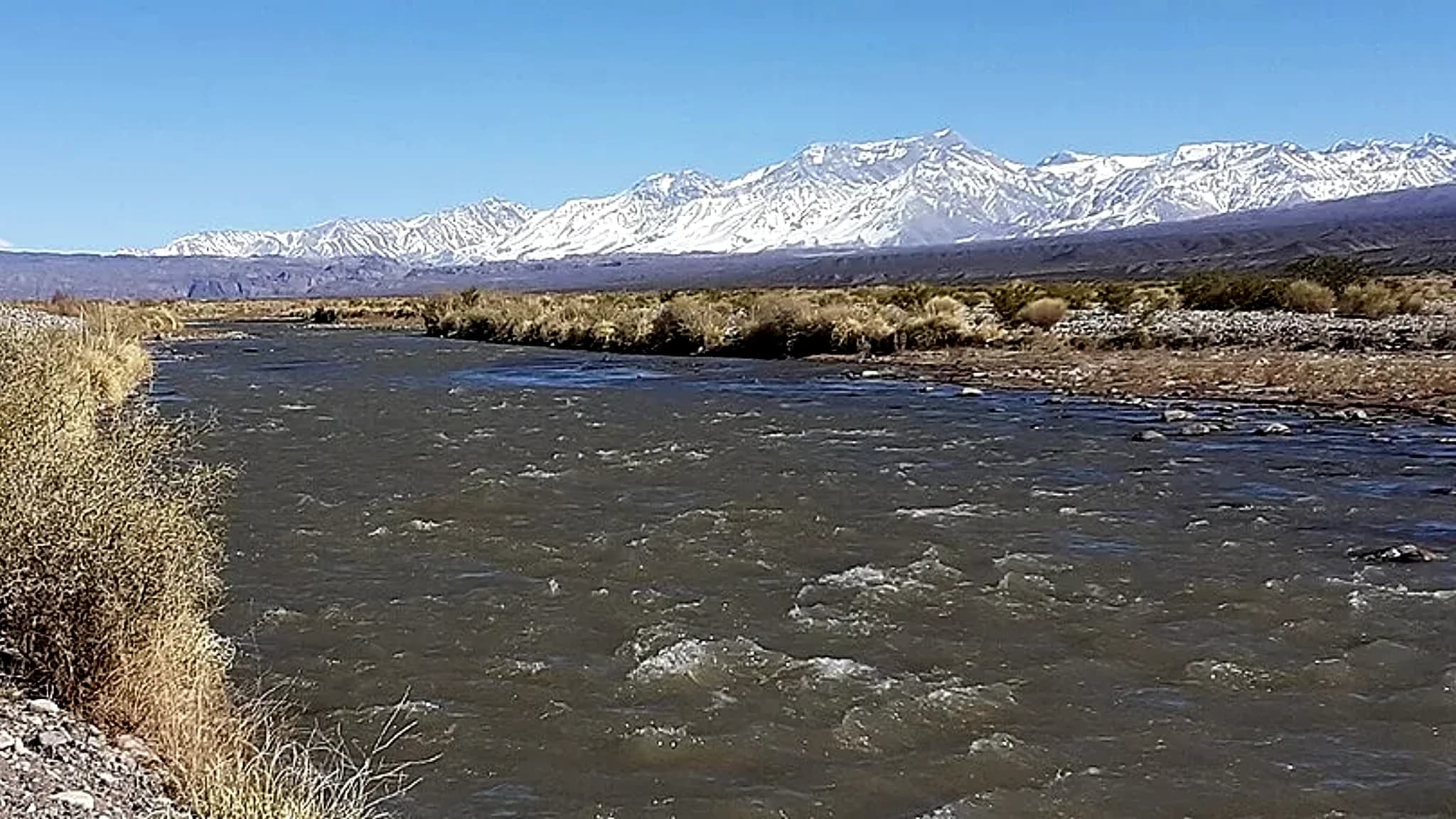
Río Calingasta
San Juan
Photos: Enrique Guardia (CC BY-SA 4.0) — via Wikimedia Commons
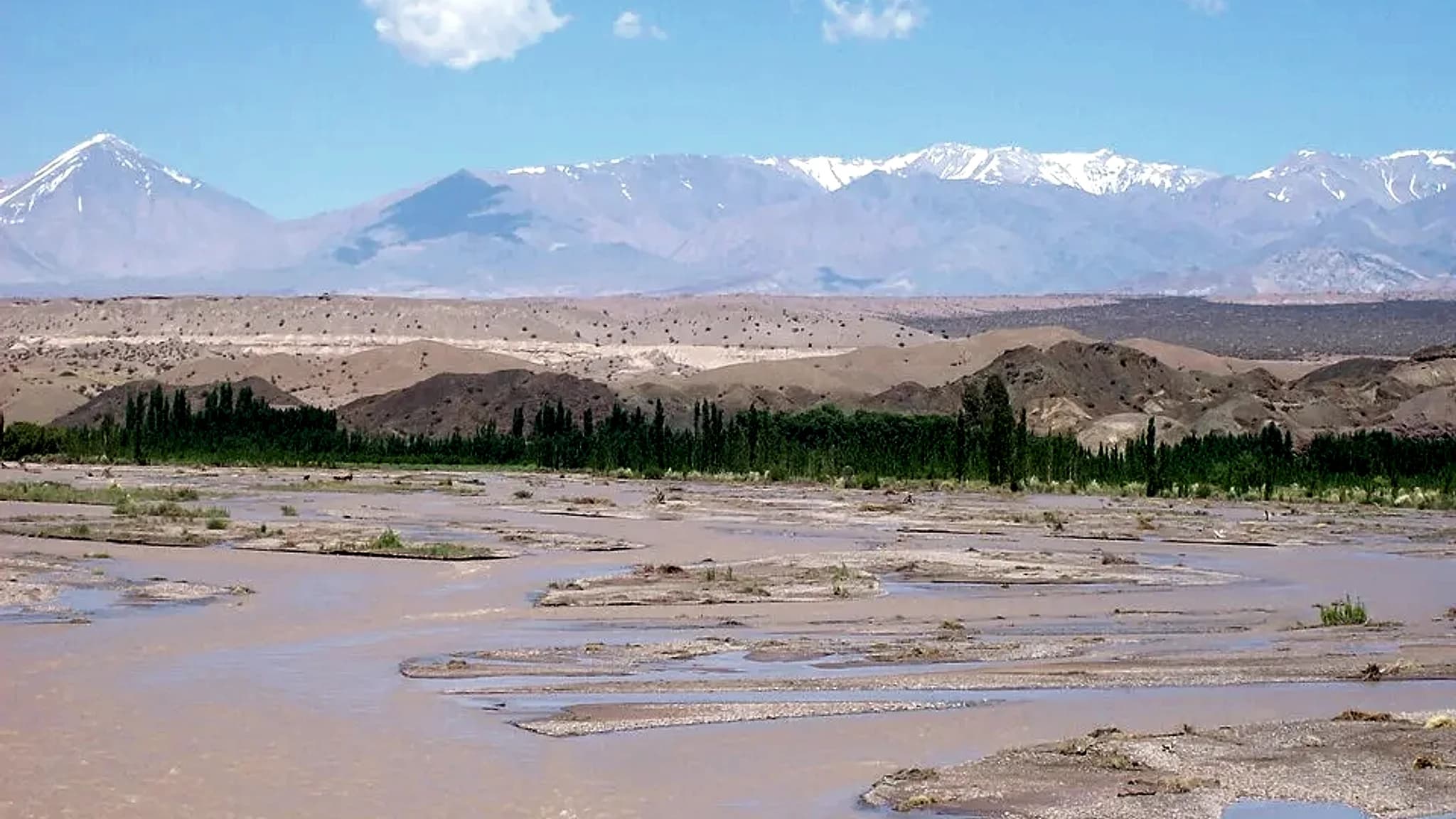
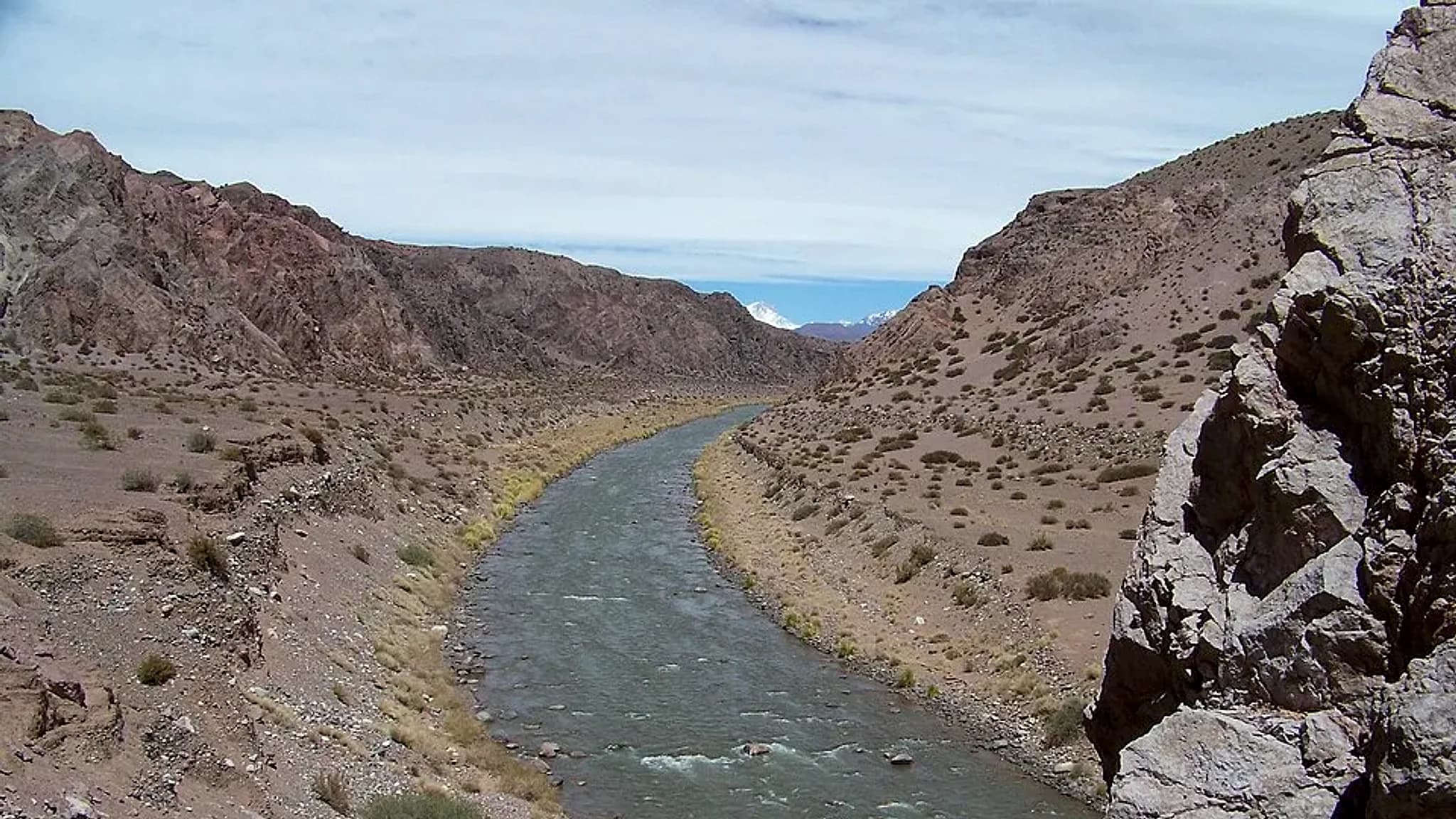
En el corazón del valle de Calingasta, donde se juntan los ríos de los Patos y Castaño, corre el río Calingasta entre álamos, chacras y el telón inmenso de la cordillera. Es agua fría de deshielo, de buen caudal, y en ella habitan la trucha arcoíris, la marrón y la de arroyo.
La junta de ríos y los pozones son los lugares de trabajo: mosca con ninfas y streamers para sondear el fondo, secas cuando hay eclosión, y spinning con cucharitas o minnows chicos en las correderas. La trucha marrón, la más marrullera, exige lecturas finas del agua y reparos; la arcoíris da peleas vivas en los remansos. En términos generales, conviene salir cuando el deshielo baja y el río aclara, hacia el otoño y el comienzo de la primavera. Pesca de valle andino, con la cordillera siempre encima y el agua cantando entre las piedras.
Sólo está habilitado el tramo que va desde la confluencia con el río Las Trojas hasta su desembocadura en el río Los Patos: del 15 de septiembre al 30 de junio con DEVOLUCIÓN OBLIGATORIA, sin extracción en ninguna fecha, una sola caña y sólo señuelos artificiales; del 1 de julio al 14 de septiembre, VEDADO. Los afluentes naturales del río Calingasta están VEDADOS todo el año, y también el tramo de aguas arriba de Las Trojas, que la norma no nombra. Res. 956-SEAyDS-2025 (San Juan), Anexo I art. 36 incisos B y C.
Frequently asked questions about Río Calingasta
What can you catch at Río Calingasta?
At Río Calingasta (San Juan) you can catch Brook trout, Brown trout, Rainbow trout.
How do you get to Río Calingasta?
Original text in Spanish: “El valle de Calingasta se alcanza por ruta de montaña desde San Juan; el río queda cerca del pueblo y de la confluencia. Preguntá en la zona por los accesos a cada tramo.”
Do I need a permit or license to fish at Río Calingasta?
Original text in Spanish: “Hace falta el permiso de pesca de San Juan: consultá el reglamento provincial, la temporada y los tramos habilitados antes de mojar la línea.”