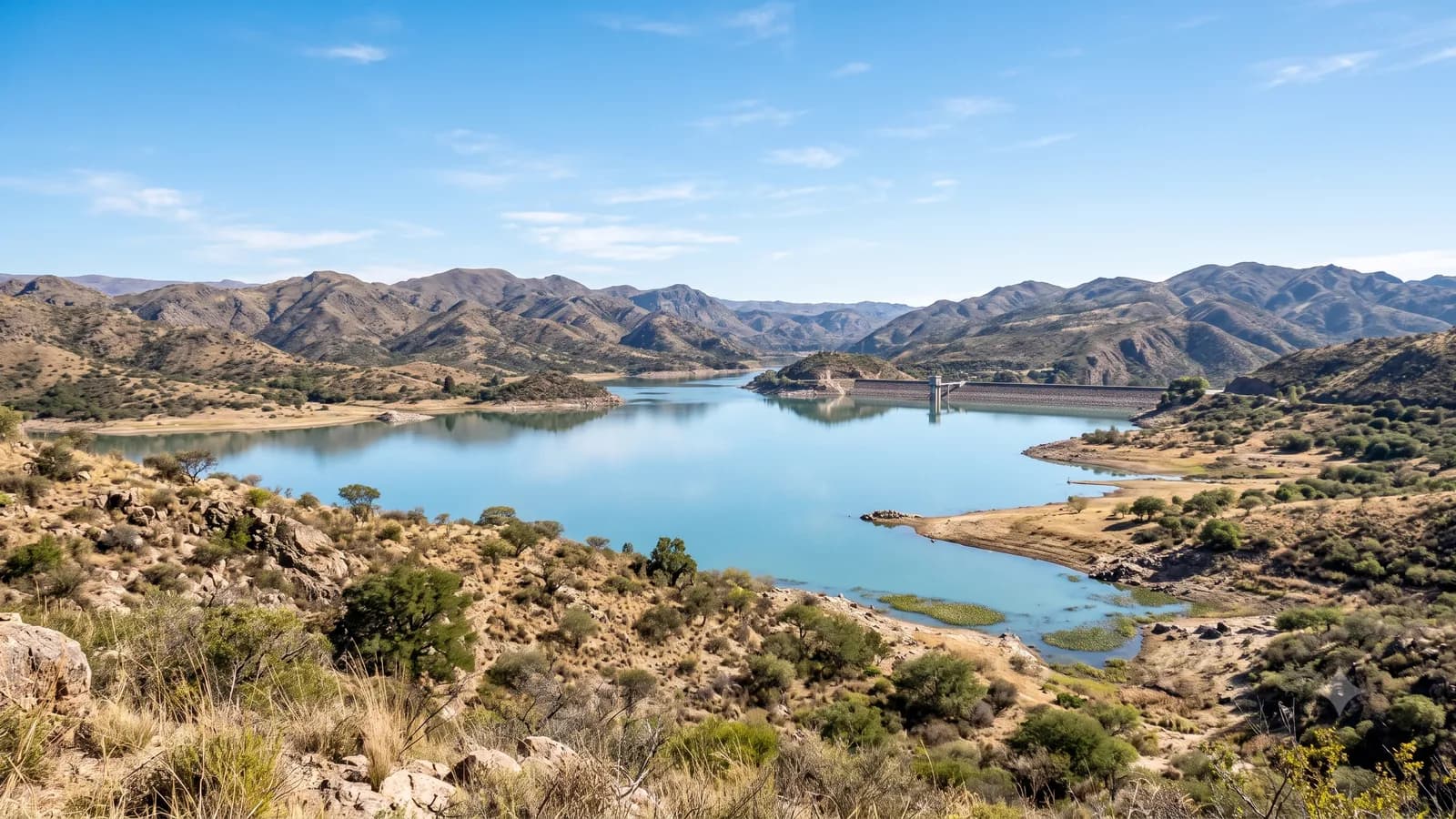
Embalse Dique Chico
Reference image by PESQA — not a photo of the place
En las sierras centrales de San Luis, el Embalse Dique Chico guarda un vaso íntimo y recogido entre laderas y quebradas, un espejo menor pero bien surtido. El pejerrey lleva la voz cantante y lo escoltan la carpa, la tararira, la trucha arcoíris de las aguas frías y menores como el dientudo, buena escuela para los chicos.
El pejerrey se pesca embarcado a la deriva o de costa, con líneas de brazoladas y mojarra y boya corrediza, atento al pique fino que despierta con el agua fresca; la trucha arcoíris responde al spinning y a la cucharita en los veriles hondos y oxigenados. La carpa da pelea de aguante en el fondo, con masa o maíz sobre las orillas templadas, y la tararira arma su temporada de verano entre juncos y pastos, con superficie y acero en el bajo. En términos generales, del otoño a la primavera se dan las mejores jornadas de pejerrey y trucha. Pesca de rincón serrano, silencio de quebrada y agua clara.
Pejerrey VEDADO del 7 de septiembre al 4 de diciembre de 2026 inclusive: acá la veda es TOTAL, ninguna modalidad, y puede extenderse según el desove. Fuera de la veda, hasta 10 pejerreyes por salida, talla mínima 25 cm, sólo de costa y murallón (no admite embarcado). La carpa sigue todo el año sin cupo, pero sólo en FlyCast o Carpfishing; mojarra, dientudo y bagre, sólo con devolución. Tararira cerrada del 2/9 al 14/12. Las desembocaduras están vedadas todo el año en 200 m a la redonda. Res. 395 DB-SAyDS-2025 art. 4; veda anunciada el 25/8/2026.
Frequently asked questions about Embalse Dique Chico
What can you catch at Embalse Dique Chico?
At Embalse Dique Chico (San Luis) you can catch Argentinian silverside (pejerrey), Trahira (tararira), Common carp, Rainbow trout, assorted river fish.
How do you get to Embalse Dique Chico?
Original text in Spanish: “Está en las sierras centrales puntanas y se accede por caminos rurales de la zona. Conviene consultar localmente o en el club de pesca por el estado del acceso y las bajadas.”
Do I need a permit or license to fish at Embalse Dique Chico?
Original text in Spanish: “Necesitás el permiso de pesca de San Luis, que se obtiene por el sistema provincial online o en comercios habilitados. Consultá las medidas y los cupos por especie antes de salir.”