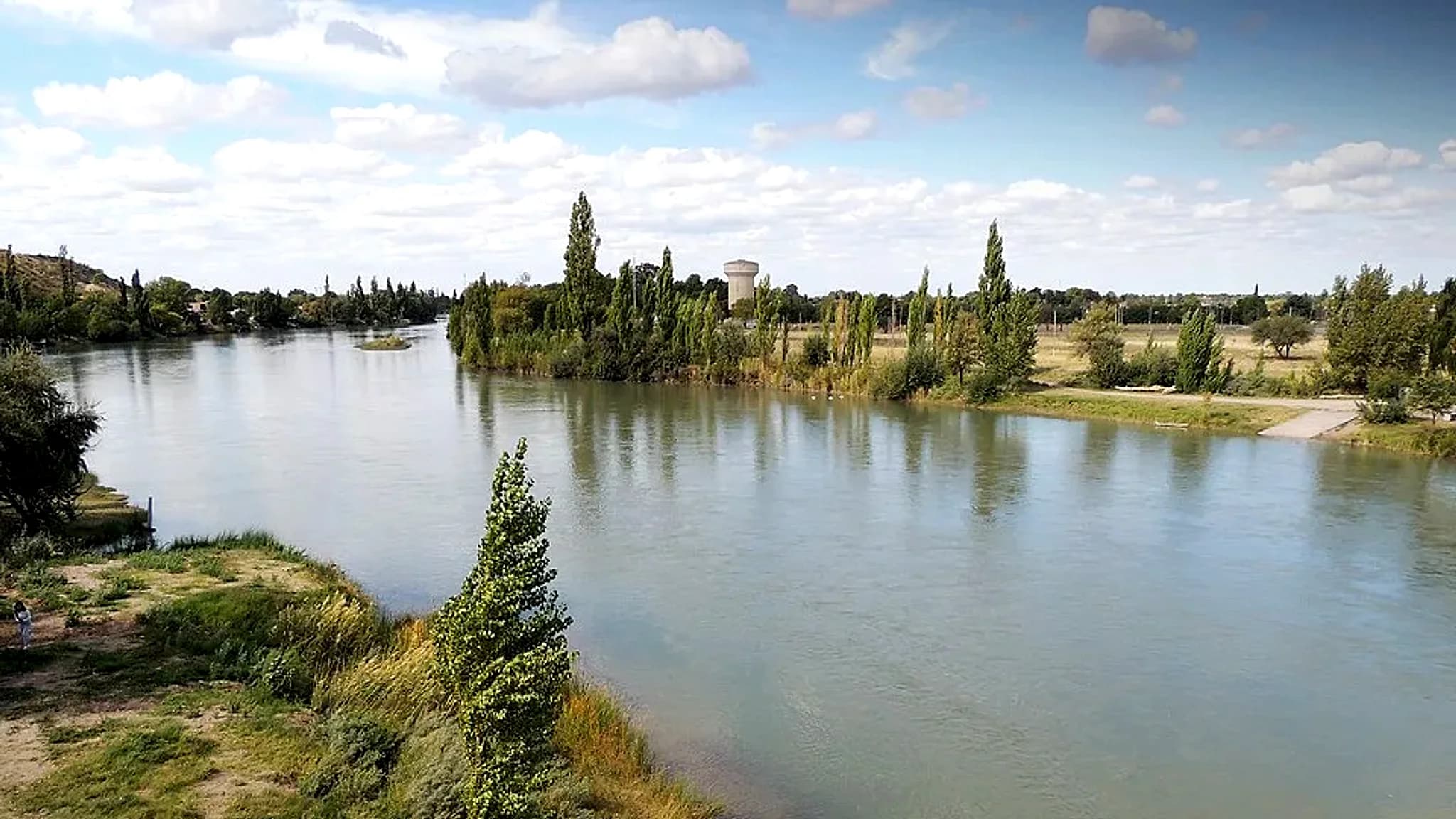
Photos: miroab (CC BY-SA 2.0) — via Wikimedia Commons
El gran río que baja de la cordillera y marca el límite de La Pampa con Río Negro, en la zona de 25 de Mayo y el embalse de Casa de Piedra: aguas frías y correntosas arriba, más templadas y anchas río abajo. En los tramos altos y frescos manda la trucha arcoíris junto a la trucha marrón, y aguas abajo aparecen el pejerrey, la perca y la carpa.
A las truchas se las busca con spinning y mosca en las correderas y los pozones, mejor cuando el caudal baja y aclara. La perca sale a señuelo chico y lento pegado al fondo, entre las piedras y los veriles; el pejerrey se trabaja de costa o embarcado con brazoladas y mojarra, atento al pique fino, y la carpa pelea de aguante a fondo con masa o maíz en los remansos templados. En general, las truchas rinden con el agua fresca y el pejerrey del otoño a la primavera. Río de viento y horizonte abierto.
Veda total del 1 de agosto al 31 de octubre de 2026. Cupos: pejerrey max 25 (min 25 cm), trucha max 2 (min 30 cm), max 1 equipo por persona. Carpa sin limite todo el ano. Zonas vedadas: Canal Cuarto Descargador Central Hidroelectrica Divisaderos, Puente Dique Punto Unido (200 m a.
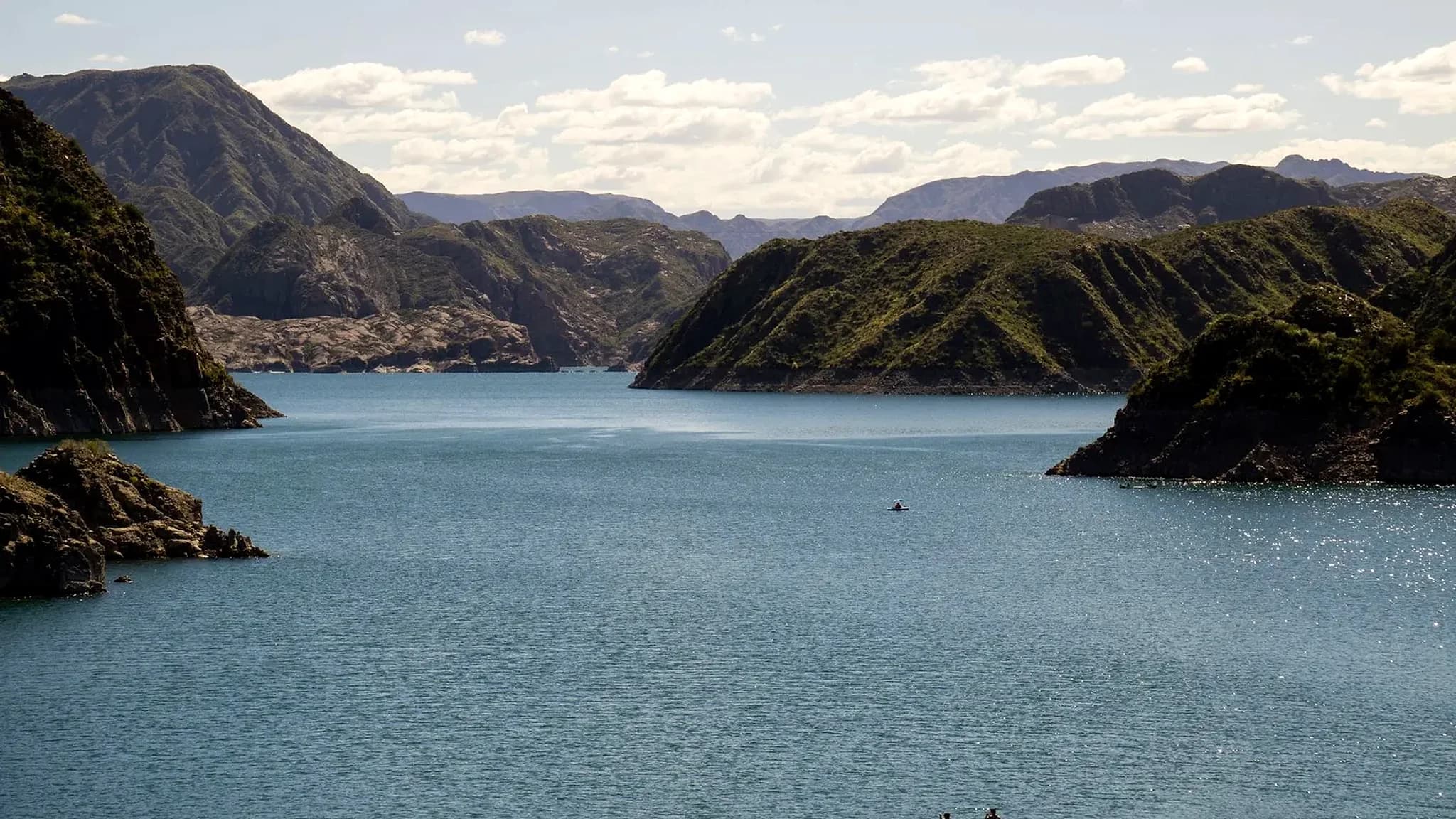
At Río Colorado (La Pampa) you can catch Argentinian silverside (pejerrey), Common carp, Creole perch, Brown trout, Rainbow trout. Allowed styles: River.
Se accede por la zona de 25 de Mayo y Casa de Piedra, sobre el límite con Río Negro, por caminos rurales; conviene consultar localmente o en el club de pesca por el estado de los accesos.
El Colorado es un río interjurisdiccional administrado por el COIRCO: rige el permiso de la provincia ribereña donde estés pescando. Verificá el reglamento y la temporada vigentes antes de salir.
Veda total del 1 de agosto al 31 de octubre de 2026. Cupos: pejerrey max 25 min 25 cm , trucha max 2 min 30 cm , max 1 equipo por persona. Carpa sin limite todo el ano. Zonas vedadas: Canal Cuarto Descargador Central Hidroelectrica Divisaderos, Puente Dique Punto Unido 200 m a.
Base data: OpenStreetMap (ODbL)
| Season | JAN | FEB | MAR | APR | MAY | JUN | JUL | AUG | SEP | OCT | NOV | DEC | IDX | NOW |
|---|---|---|---|---|---|---|---|---|---|---|---|---|---|---|
| Argentinian silverside (pejerrey). PEAK JUN–AUG | 5 | Closed | ||||||||||||
| Common carp. PEAK OCT–MAR | 5 | Closed | ||||||||||||
| Creole perch. PEAK NOV–JAN | 5 | Closed | ||||||||||||
| Brown trout. PEAK MAR–APR | 5 | Closed | ||||||||||||
| Rainbow trout. PEAK MAR–APR | 5 | Closed |
The number (0 to 100) sums up how likely the species is to be active here this month: it weighs the season, recent catch reports and, where there is a river gauge, the water level.
The pejerrey is a medium-sized fish with a delicate mouth, so the tackle leans to the fine and sensitive side. A recommended setup:
The philosophy of the tackle is simple: the finer and more sensitive it is, the more bites you will detect and the more you will enjoy the fight of this silver fish.
Bottom fishing with boilies, corn or dough and a hair rig. Medium gear with rod pods and a bite alarm; it withstands long fights.
No one has reported from this spot yet. Fished here? Tell us how it went — you'll help the next angler.
Light spinning with small spoons, micro-jigs and soft plastics, or fly with small streamers. Bait: worm. It keeps company with the trout in Patagonian lakes and rivers.
Gear is chosen according to the environment and the expected size. A versatile, concrete setup:
Spinning (general use, rivers and lakes):
Fly fishing:
Recommended accessories: rubber net (less harm to the fish for release), forceps for removing hooks, barbless hooks, and waders for safe wading in cold water.
The gear is matched to the setting and the size of trout you are after, but these setups cover most situations in Argentina:
Spinning (general use, trout of 1 to 3 kg):
Fly:
For trophy specimens (5-10+ kg at the Strobel): step up the power—medium/medium-heavy spinning with 15-20 lb braid and a robust fluoro leader, or a 7/8 fly outfit—because these are fish with strength and runs far superior to the average trout.
In every case: a well-adjusted drag, sharp hooks (barbless if you are going to release), and a rubber net to handle the fish with the least possible harm.