Tiger surubí
Pick where and when. Find the guides and spots to fish tiger surubí.
In seasonWhere to fish


Season
- Off
- In season

Tap it to see it in 3DClick it to see it in 3D
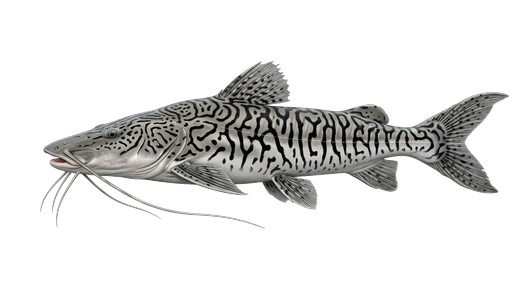
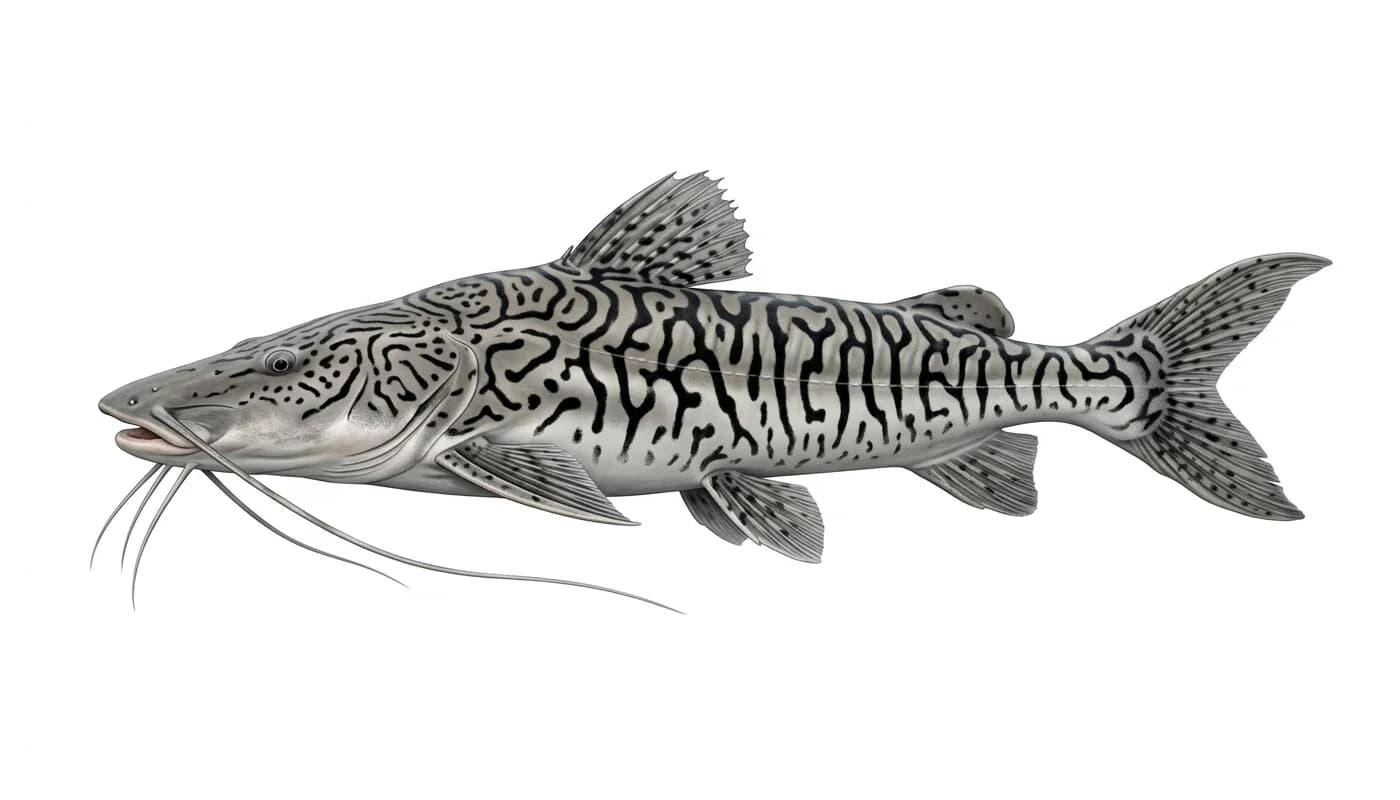
The striped cat of the Paraná
Every tiger surubí you post with a photo counts toward your Pesquedex. Bronze comes with the first catch; silver and gold ask for a variety of spots and provinces.
Recent Tiger surubí catches
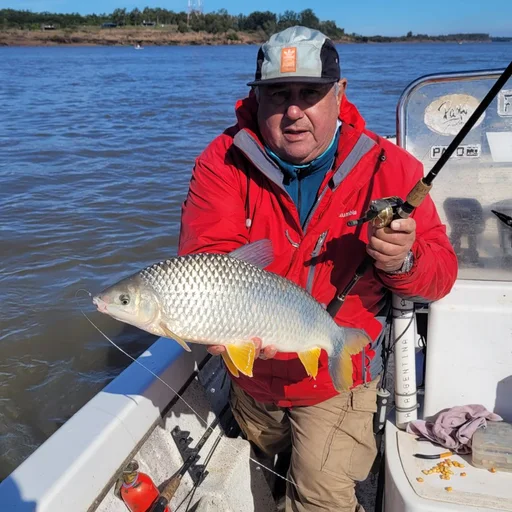
Nobody has posted a tiger surubí report yet. Post yours with a photo: you get the catch card and the bronze medal.
Be the first →Habitat
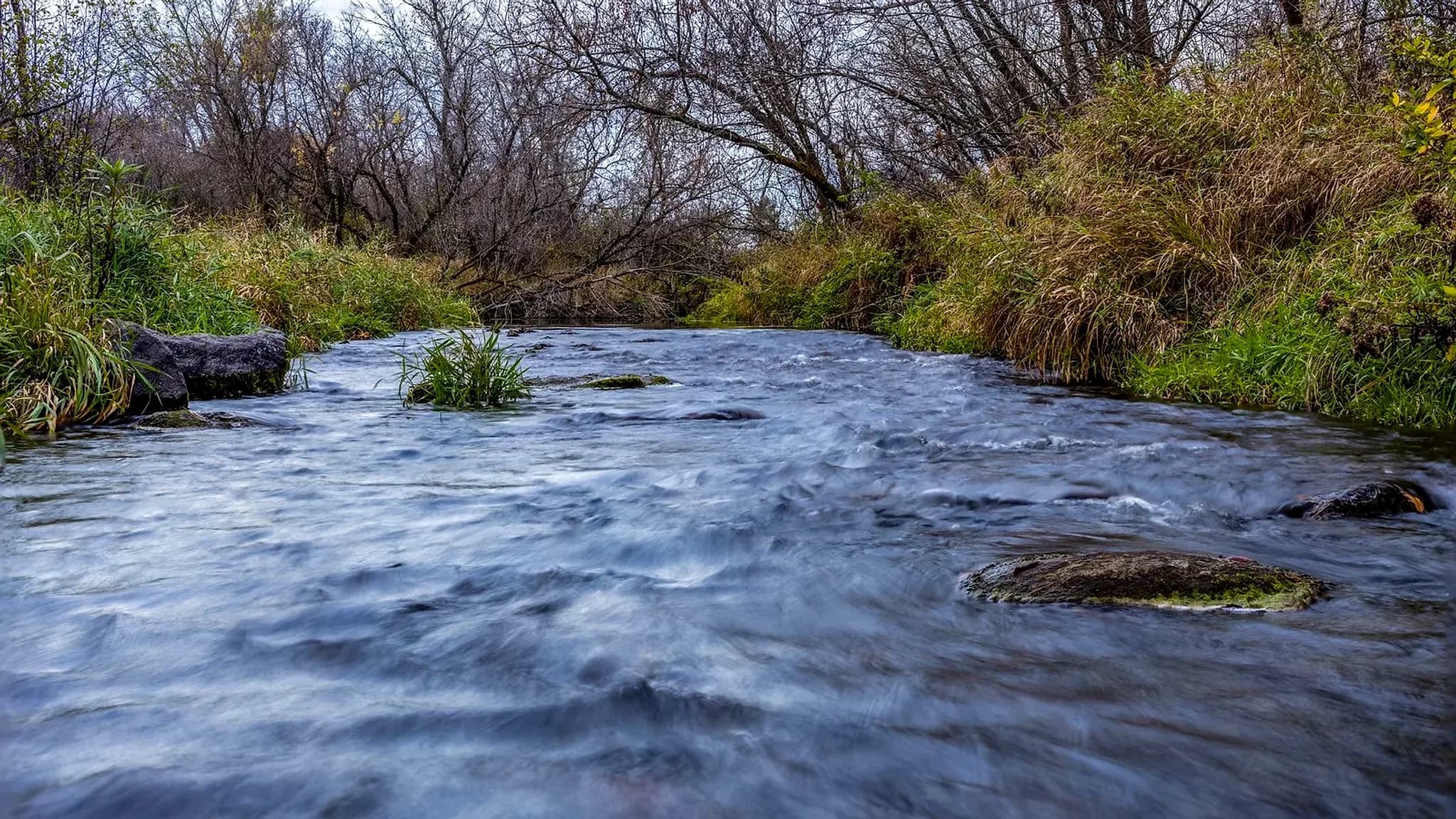
The tiger sorubim is a big-river fish: its natural habitat is the deep, turbid channels of the Paraguay–Paraná system, where it seeks depth, current, and structure. It lives in the Río de la Plata basin throughout Argentina's Litoral and northeast, and you'll find it both in the main channel of the Paraná and in the Paraguay River, the Bermejo, the Pilcomayo, and in the mouths and lagoons connected to those systems.
Its favorite spots are the deep holes, especially where the current carves the bottom against a bank, at the junctions of two waters, behind a rocky ledge or sunken log, and in the current heads where food gathers. By day it stays tight to the bottom and to structure, in those holes where the water is slower and darker; at dusk it moves toward the currents and the mouths of streams and channels to hunt. Always look for depth breaks, eddies alongside strong current, and areas with logs or rocks: that's where it lies in wait for its food.
The best season runs from spring to fall (October to April), peaking in the warm months, when the water warms up and the fish is more active and feeding hard. The river level matters a great deal: rises and drops, and above all the water movements after rain, trigger activity. In winter it goes dormant down deep and the bite becomes much more selective.
Baits and lures
The tiger sorubim is a piscivorous predator, so anything that imitates or is a small fish works. In traditional Argentine fishing, live or natural bait is king, but it also takes large lures very well.
Natural baits (the most effective):
- Live morena: the star bait for sorubim in the Paraná. Tough on the hook and very attractive because of its movement.
- Eel: another classic of the highest effectiveness, holds up well in the current.
- Strip or fillet of sábalo / boga: a widely used cut bait, a long strip of sábalo that releases oils and scent into the water.
- Small live bogas or dientudos: local baitfish hooked live, irresistible at dusk.
- Chunked tararira or morena: an option when you can't get live bait.
Artificial lures:
- Large poppers and topwater: spectacular at dawn and dusk in stream mouths and currents, the strike is explosive.
Recommended gear
The tiger sorubim is a big, strong fish that fights in current and against structure, so you need robust, reliable gear. The rule is not to underestimate it: a medium fish in current already demands a lot from your tackle.
For bottom fishing / drifting with bait:
- Rod: medium-heavy to heavy action, 1.80 to 2.40 m, with good reserve power to lift a fish out of the hole. One-piece or two-piece, with reinforced guides.
- Reel: a rotating reel (a good-sized baitcaster) or a robust spinning reel, with a good drag and line capacity. The drag has to be smooth but powerful to withstand the runs.
- Line: braid of 0.30 to 0.40 mm (approx. 40 to 65 lb), which gives you sensitivity to detect the bite on the bottom and power to fight. Alternatively, monofilament nylon of 0.50 to 0.60 mm if you prefer the cushioning of nylon.
- Leader: essential. Use a section of fluorocarbon or heavy nylon of 0.60 to 0.90 mm, or even fine wire/steel, at least 40 to 60 cm long, to resist the chafing against the hard mouth, the structures, and the fish's skin. The sorubim doesn't cut with teeth like a tararira, but its mouth sands down the line.
- Hooks: strong, eagle-claw / O'Shaughnessy type 6/0 to 9/0, always well sharpened. If you fish catch and release, consider circle and barbless hooks (or with the barb pinched down) for a safer unhooking.
- Sinker: matched to the current, of a type that rests on the bottom without dragging too much.
For spinning with lures:
- Medium-heavy spinning rod of 1.80 to 2.10 m, with the power to cast large lures and fight in current.
- Spinning reel 4000 to 6000 with a good drag, loaded with 30 to 50 lb braid.
- Fluorocarbon leader 0.60 to 0.80 mm ahead of the lure.
Always add long pliers for unhooking, gloves to handle the fish safely, and a net or lip grip to hold it without hurting it if you're going to release it.
Fishing techniques
The tiger sorubim is caught mainly in three ways: bottom fishing with bait, drifting over the holes, and lure fishing with spinning or trolling. The key is always to present the bait or lure near the bottom, in the current, or tight to structure, and to respect its activity windows.
Bottom fishing / drifting (the most classic):
- Use the sounder to locate a deep hole, a junction of waters, or the foot of a bank with current.
- Rig a bottom line with a sinker matched to the current (one that touches bottom without dragging too much) and a strong hook, eagle-claw type 6/0 to 9/0 depending on bait size.
- Bait with live morena or eel, or with a good sábalo strip, and let the line work in the hole.
- You can anchor the boat or let yourself drift over the hole, covering different depths until you find where the fish is holding.
- When it bites, wait for it to "load up" the jolt and set firmly: the sorubim's mouth is hard and you need to secure the hook.
Spinning (with lures):
- Comb the stream mouths, currents, and current heads at dawn and dusk with poppers or topwater; the strike is brutal.
- During the day, cast heavy jigs or large soft plastics to the bottom of the hole, with a slow retrieve and taps on the bottom.
Trolling:
- Drag deep-diving minnows or heavy spoons along the banks and depth breaks, at slow speed, to locate active fish over long stretches of river.
Guide tips:
- The best times are dusk, the first part of the night, and dawn. At night is when it feeds most.
- Work the river level changes: after rain or with the water moving, the bite turns on.
- Ease off the pressure over structure: the sorubim "buries in" against a log or rock, so the moment it hooks up you have to pull it out of its refuge firmly so it doesn't break you off.
- Patience: it's not a fish that bites all the time; it's about waiting for the activity "window" in the right spot.
Closed season & regulations
Closed seasons, minimum size and bag limits for tiger surubí are set by each province and change every year. The current rule is on each spot's page: confirm it before heading out.
Read the full note
Sorubim fishing in Argentina is regulated to protect the species, and it is your responsibility as an angler to know and respect those rules before you head out.
Why the closed season exists. The closed season (veda) is a period when fishing is prohibited or restricted to protect the fish's reproduction: the sorubim carries out reproductive migrations upriver (the so-called "runs" or piracemas) in the warm season, and catching it at that time jeopardizes the future of the populations. That's why the provinces set total or partial closures, minimum catch sizes, and limits per angler and per day.
Catch & release culture. The sorubim is an increasingly pressured sport resource, and in many Litoral environments a strong culture of catch and release prevails, especially for large fish, which are the most fertile, breeding females. Releasing the fish properly—handling it with wet hands, minimizing time out of the water, without hurting its gills, and reviving it in the current before letting it go—is the best way to ensure there are still sorubim tomorrow.
Important: the rules VARY by province and by year. The closed-season dates, the minimum and maximum sizes, the limits, and the permitted methods (for example, mandatory release or barbless hooks) change depending on the province and are updated season to season. Corrientes, Chaco, Formosa, Santa Fe, Entre Ríos, and Misiones each have their own regulations. That's why we don't publish dates or numbers here: it would be irresponsible to give you a figure that may be out of date.
Before each trip, consult the official source of the province where you're going to fish: the relevant Directorate of Natural Resources, Wildlife, or Fisheries, or the provincial agency that issues the permit and the regulations in force. Get your fishing permit, check the current closed season, and respect sizes and limits. It's the only way to fish with peace of mind, legally, and while caring for the resource.
Shops & clubs in the area
Ready to chase tiger surubí? Find guides who target this species and message them.
Plan your trip hereDo you guide tiger surubí trips? Join for free and show up here →
Read before you go

Frequently asked questions about tiger surubí
Can you fish for Tiger surubí right now, in October?
Yes: October falls within the tiger surubí season. Its best time of year is nov–feb. Before heading out, check the fishing rule for the spot: closed seasons are set by each province.
What's the best time to fish Tiger surubí?
The best time for tiger surubí is nov–feb. Check each place's page for the bite calendar and to respect current closed seasons.
Where can you fish Tiger surubí in Argentina?
Some of the best places to fish tiger surubí are Goya (Paraná), Río Paraná (Isla del Cerrito), Río Bermejo (Chaco), Paso de la Patria. On PESQA you get the map, access info, seasons and verified guides for each one.