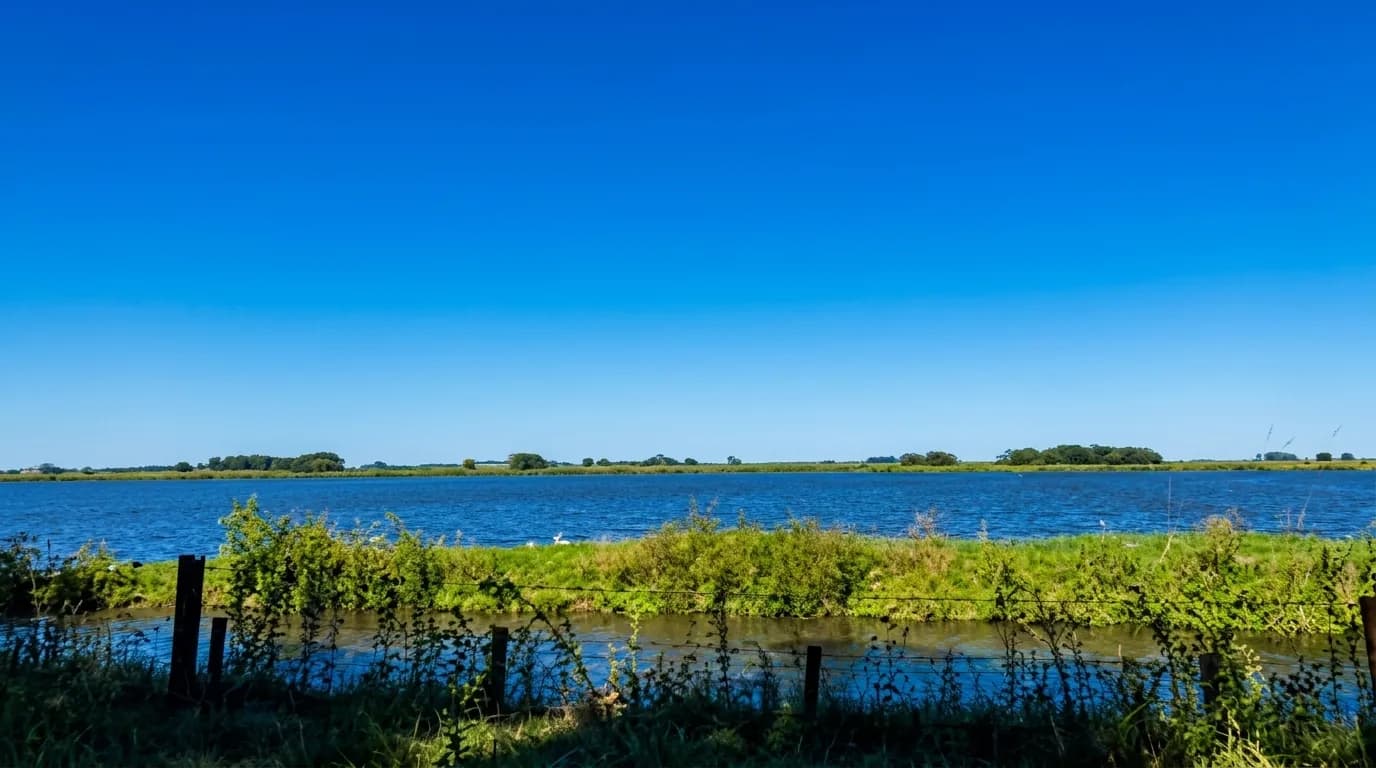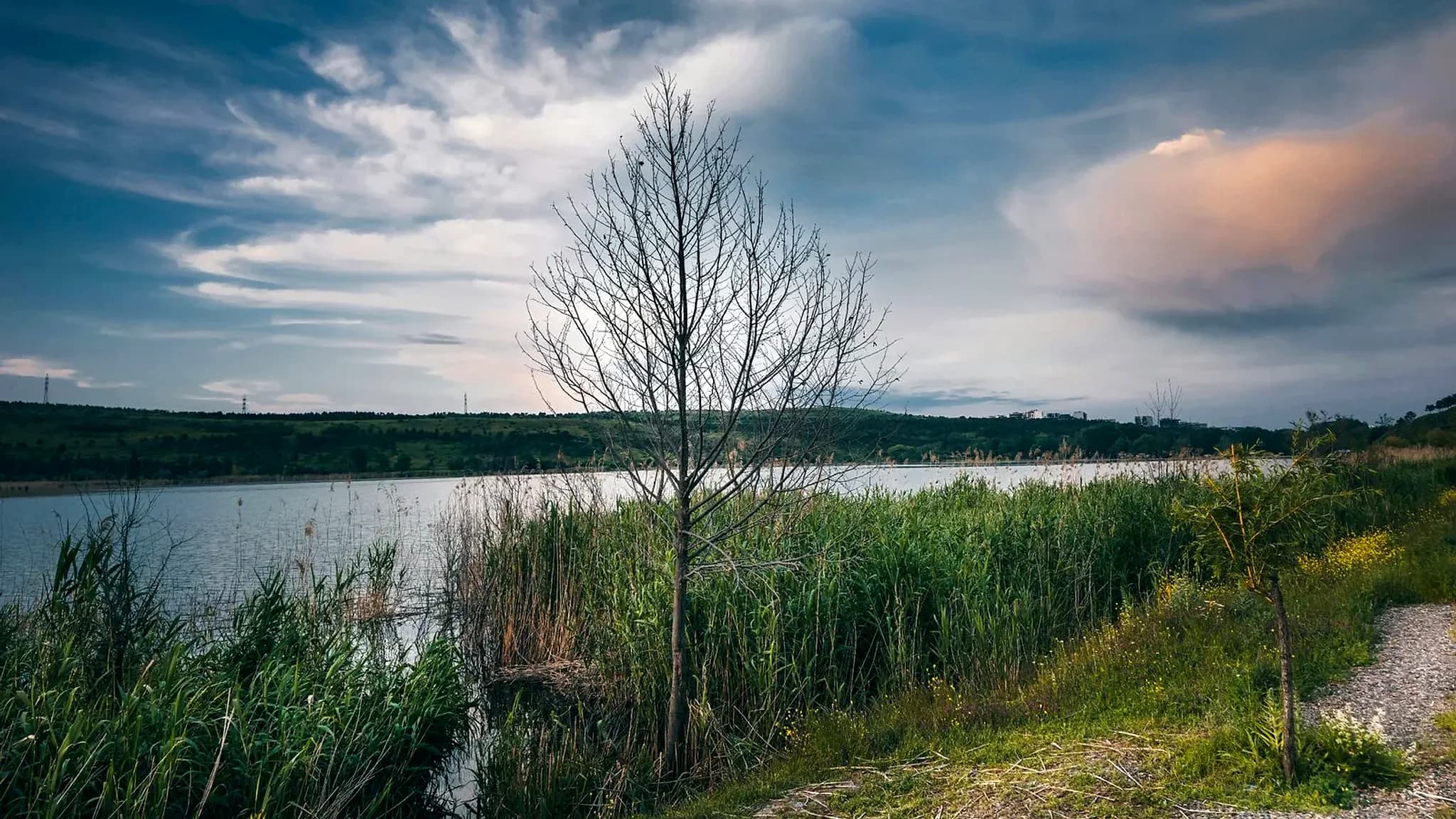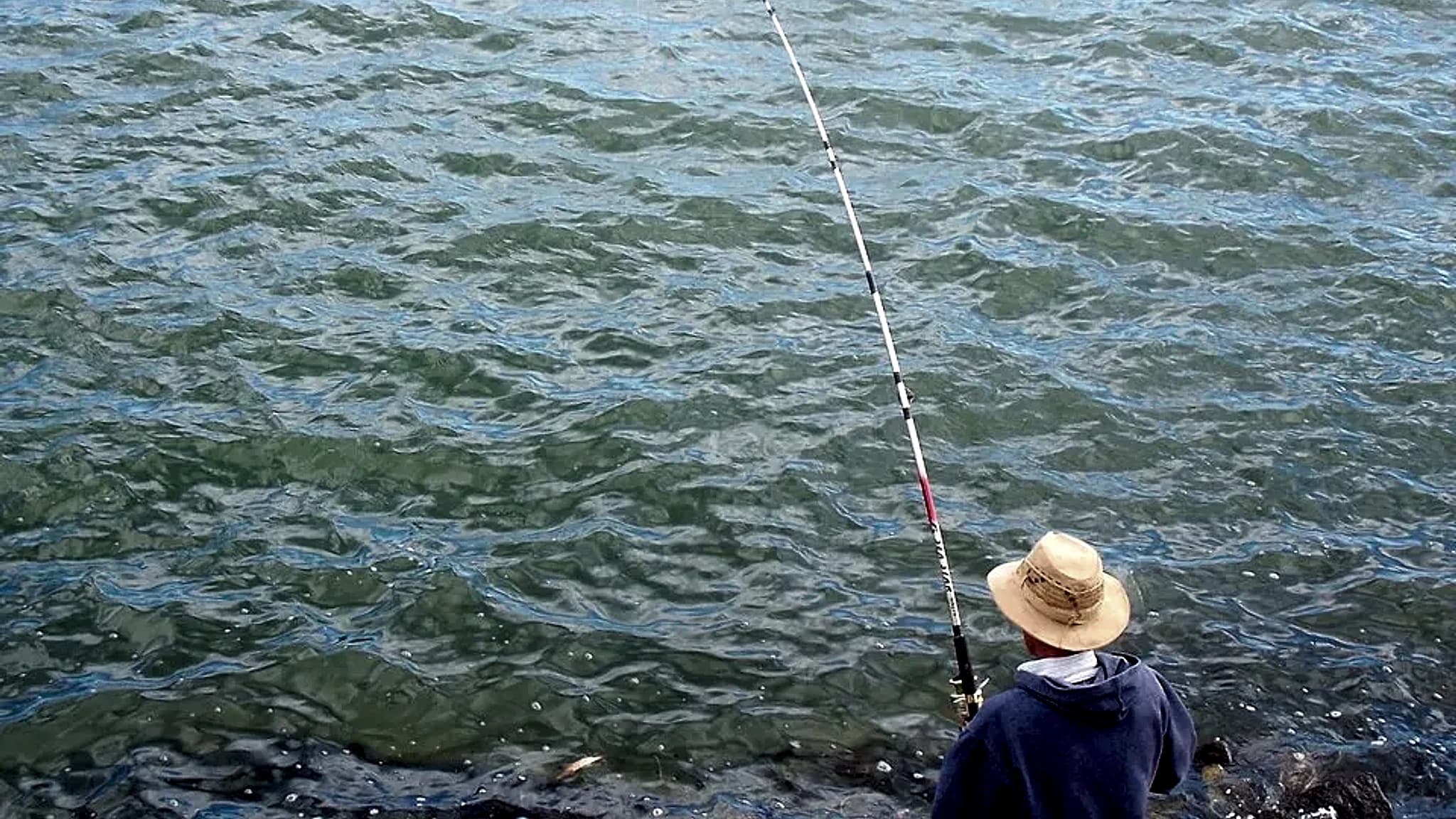
Photos: Leandro Kibisz (Loco085) (CC BY-SA 2.5) — via Wikimedia Commons
Bajando de las sierras de Tandilia hacia el Atlántico, el Río Quequén Grande corre entre barrancas y pozones hasta desembocar en Necochea y Quequén. Es un río de pejerrey de agua dulce y de tararira, dos especies que le dan carácter propio a sus tramos de correntada y remanso.
El pejerrey de río se busca de costa con línea de brazoladas y mojarra, o con boya corrediza en los pozones y veriles donde se junta el cardumen, atento al pique fino. La tararira, en cambio, es cacería de verano: entre la vegetación de las orillas y los troncos hundidos ataca señuelos de superficie, y conviene el bajo de acero para resistir sus dientes. En términos generales, el pejerrey pide agua fresca del otoño a la primavera, mientras la tararira se prende con el calor. Río de barranca y monte ribereño, con el mar esperando río abajo.
Ambientes fluviales (pejerrey veda 1 sept-1 dic; tararira veda 1 nov-31 ene con devolucion obligatoria). Centro de Interes rio N.62.
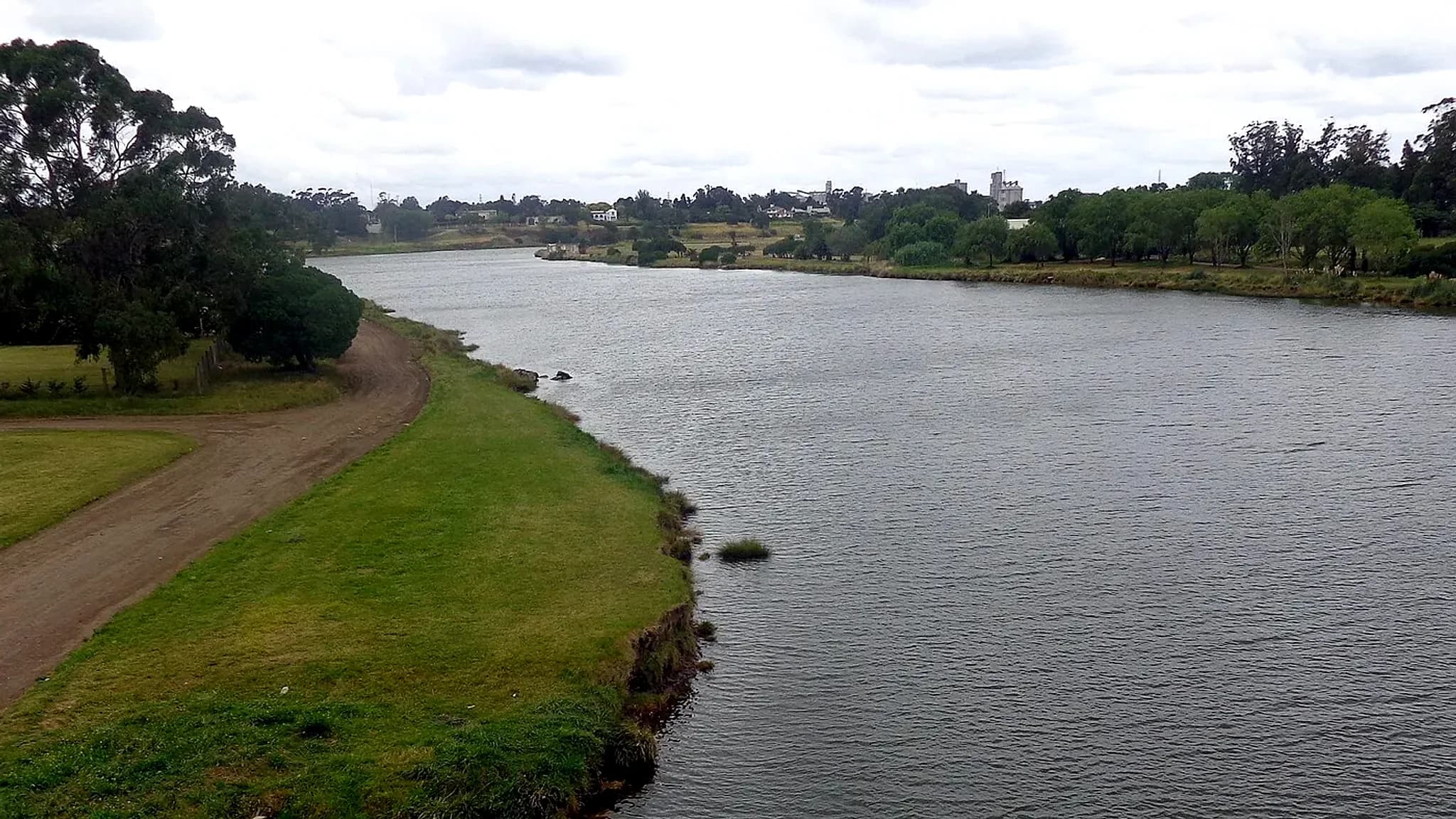
Base data: Wikidata (CC0)
At Río Quequén Grande (Buenos Aires) you can catch Argentinian silverside (pejerrey), Trahira (tararira).
Se accede por distintos tramos entre la desembocadura en Necochea/Quequén y el curso medio, en la zona de Tandilia; consultá localmente los accesos a las barrancas y los mejores pozones.
Corresponde el permiso de pesca provincial bonaerense. Respetá la medida mínima y el cupo del pejerrey y consultá el reglamento vigente y las vedas.
Ambientes fluviales pejerrey veda 1 sept-1 dic; tararira veda 1 nov-31 ene con devolucion obligatoria . Centro de Interes rio N.62.
| Season | JAN | FEB | MAR | APR | MAY | JUN | JUL | AUG | SEP | OCT | NOV | DEC | IDX | NOW |
|---|---|---|---|---|---|---|---|---|---|---|---|---|---|---|
| Argentinian silverside (pejerrey). PEAK JUN–AUG | 70 | Excellent | ||||||||||||
| Trahira (tararira). PEAK DEC–FEB | 15 | Off |
The number (0 to 100) sums up how likely the species is to be active here this month: it weighs the season, recent catch reports and, where there is a river gauge, the water level.
The pejerrey is a medium-sized fish with a delicate mouth, so the tackle leans to the fine and sensitive side. A recommended setup:
The philosophy of the tackle is simple: the finer and more sensitive it is, the more bites you will detect and the more you will enjoy the fight of this silver fish.
For the tararira a light-to-medium outfit is best, sturdy but comfortable to cast for hours. The setup depends on the method, but these are the specific recommendations:
Rod:
Guides, campsites and places to stay that work these waters.
No one has reported from this spot yet. Fished here? Tell us how it went — you'll help the next angler.
There are already 48 businesses loaded in the area. If yours is not there — or it is and you have not claimed it — the listing is free and puts you in front of whoever is planning a trip to Río Quequén Grande.
Claiming is free · no card · ~15 min
Yes, and it is a good moment: in August Argentinian silverside (pejerrey) are at their peak in Río Quequén Grande.
In Río Quequén Grande it is worth going when its main species bite: Argentinian silverside (pejerrey) (APR–SEP); Trahira (tararira) (OCT–APR).
Yes: PESQA lists 2 guides working Río Quequén Grande, among them Viento de Acero, Gomez Pesca.
Near Río Quequén Grande PESQA lists 33 places to stay: Camping Monte Pasubio, La Casita de Carla, Cabañas Maquén.
Around Río Quequén Grande there are 11 marinas and tackle shops: La Escollera Pesca, Carnadas "El gordo", Florida Almacen Naval SRL.
Río Quequén Grande is in the province of Buenos Aires.
Reel:
Line:
Leader (essential):
Accessories: