Elephant fish (pez gallo)
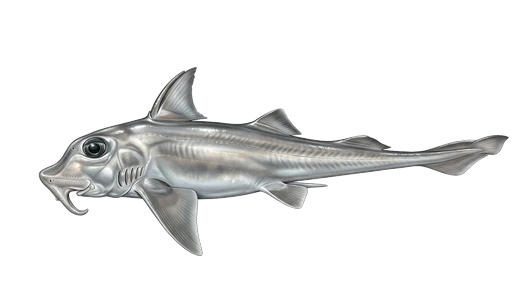
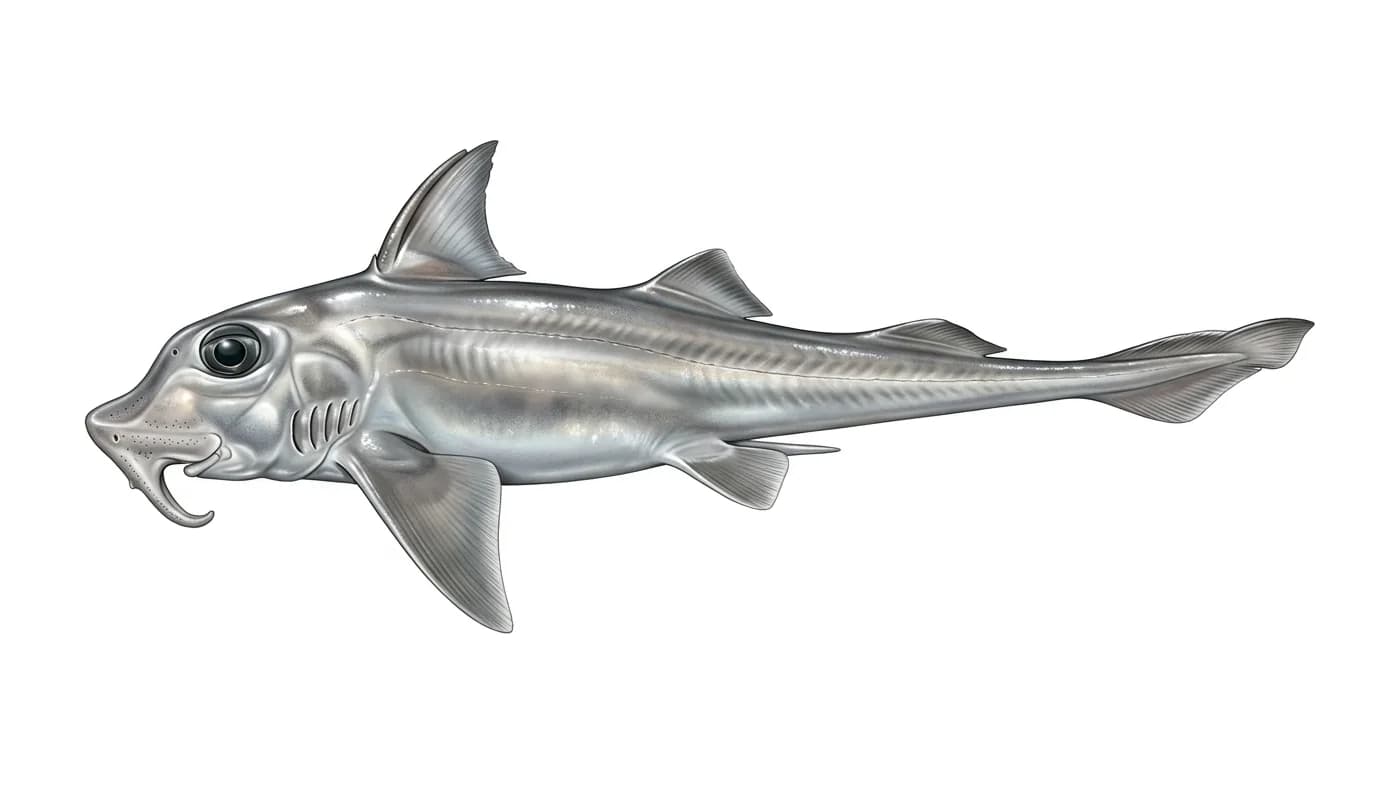
The elephant fish is a saltwater cartilaginous fish that inhabits the coastal waters of the Argentine southern Atlantic.
Out of season · starts in AprilWhere to fish
Guides for elephant fish (pez gallo)

Season
- Off
- In season
Tap it to see it in 3DClick it to see it in 3D
The Atlantic's odd one
Every elephant fish (pez gallo) you post with a photo counts toward your Pesquedex. Bronze comes with the first catch; silver and gold ask for a variety of spots and provinces.
Recent Elephant fish (pez gallo) catches
Nobody has posted a elephant fish (pez gallo) report yet. Post yours with a photo: you get the catch card and the bronze medal.
Be the first →Habitat
The elephant fish is a distinctly coastal, shelf-dwelling species that lives associated with soft sand and mud bottoms where it finds its food. It is not a fish of rocky structure or reef: its element is gently sloping beaches, sandbanks, open bays, and gulfs where the bottom is clean and even. That trunk-shaped snout is designed precisely to probe and rake that kind of substrate in search of buried mollusks and crustaceans.
In Argentina it is found all along the Atlantic coast, but the most significant and accessible concentrations for the sport angler are on the Patagonian coast: the gulfs of Río Negro and Chubut, the bays of Santa Cruz, and the entire cold-water coastal strip of the south. It prefers temperate-cold waters and is caught both from shore —on beaches and jetties with access to sandy bottom— and from a boat, anchored or drifting over the banks where it gathers.
Seasonality is key with this species. The elephant fish moves closer to shore and into shallow areas mainly during the cold months, from April to September, which is when the best fishing season is concentrated. During those months it seeks more sheltered and accessible waters, while in summer it tends to withdraw toward deeper areas. To find it, aim for sandy bottoms with some water movement, paying attention to the tide changes, which are the moments when feeding becomes active.
Baits and lures
The elephant fish is a bottom feeder that eats invertebrates, so fresh natural baits are by far what works best. The most effective options along the Argentine coast are:
- Clam and mussel: perhaps the star bait for this species, because it mirrors its natural diet of mollusks. Fresh and well tied to the hook with elastic thread (so the elephant fish's hard mouth doesn't rip it off in one go), it's lethal.
- Shrimp and prawn: crustaceans that the elephant fish detects and takes with confidence. Excellent both whole and in pieces.
- Octopus and squid: tough baits that hold up well on the hook and release plenty of scent; very useful when there are crabs or minor nibblers stealing bait.
- Sea worm (polychaetes): when you can get it, it's a first-rate natural morsel for fish that rake the bottom.
- Fresh fish fillet (for example, strips of mackerel or another white fish): works well thanks to its scent and durability.
Recommended gear
For the elephant fish, at 1 to 4 kg and fished on the bottom in a marine setting, a robust but balanced shore setup is enough, designed to cast a sinker and hold against the current:
- Rod: for surfcasting, a beach rod of 3.90 to 4.20 m with medium/medium-heavy action, able to handle sinkers of 80 to 150 g depending on the state of the sea and the current. For boat fishing, a shorter bottom rod (2.10 to 2.70 m) of medium power is ideal.
- Reel: a spinning reel size 6000 to 8000 with a good drag and line capacity, or a low-profile baitcaster for boat fishing. It should have good capacity, since a generous spool is advisable for the surf.
- Main line: braid (multifilament) of 0.20 to 0.30 mm for its low stretch and sensitivity to read the elephant fish's sustained bite, or 0.40–0.50 mm nylon if you prefer something cheaper with more cushioning. With braid, add a shock leader (a section of 0.50–0.60 mm nylon) to absorb the shock of casting with a heavy sinker.
- Leader / droppers: a leader of nylon or fluorocarbon of 0.50 to 0.70 mm. Steel isn't needed, because the elephant fish has no cutting teeth, but a thick leader stands up well to the abrasion of the sandy bottom and the fish's hard mouth.
- Hooks: medium-shank, sized to the bait (for example from 2/0 to 4/0), nice and sharp to set in that tough mouth.
- Sinker: a gripping (wired or grapnel) sinker on shore to hold the setup against the current; a spherical or pyramid sinker for drift boat fishing.
- Accessories: a rod holder or tripod for the beach, elastic bait thread to tie the bait firmly, and a good pair of pliers to unhook without hurting yourself on that hard mouth.
Fishing techniques
The technique par excellence for the elephant fish is bottom fishing (surfcasting from shore, or anchored/drifting from a boat). It's a benthic fish that doesn't rise to mid-water or chase lures, so the whole technique revolves around presenting the bait firmly on the bottom, over sandy substrate.
From shore (surfcasting):
- Look for a beach or jetty with a clean sandy bottom and some depth nearby. Even bottoms, free of rock, are ideal.
- Rig a bottom line with a gripping sinker (with wires) to hold the setup against the current, and one or two short droppers with hooks suited to the bait.
- Bait up with well-tied clam, mussel, or shrimp, cast, and rest the rod in the holder with just the right tension to read the bite.
- The elephant fish's bite is usually sustained and heavy, more of a weight settling in than a nervous jerk. Give it a moment for the trunk to work the bait and set the hook firmly, because its mouth is hard.
From a boat (anchored or drifting):
- Locate the sandbanks where the school gathers; a slow drift over the bottom lets you "comb" the area until you find them.
- Use bottom rigs (paternoster) with a sinker suited to the depth and current.
- Once one shows up, there are usually more: the elephant fish travels in groups, so if they're biting, stay over that patch.
Guide's tips:
- The tide changes (the water movement) are the hot moments; the fishing turns on when the tide is running.
- Reinforce the bait's tie with elastic thread: you lose fewer baits and hook up more.
- No need to strike hard at the first touch; the elephant fish "works" the bait with its snout. Wait for the firm weight and then, a sharp set.
- Since these are cold waters, autumn-winter days with a calm sea and a bit of sun tend to produce best.
Closed season & regulations
Closed seasons, minimum size and bag limits for elephant fish (pez gallo) are set by each province and change every year. The current rule is on each spot's page: confirm it before heading out.
Read the full note
Fishing regulation in Argentina varies by province and changes from year to year, and the elephant fish is no exception. Before heading out, it is the angler's responsibility to check the current rules with the corresponding provincial authority —the Directorate of Wildlife, Fisheries, or Natural Resources of the province where you'll be fishing (Buenos Aires, Río Negro, Chubut, Santa Cruz, etc.)— as well as to obtain the appropriate sport fishing permit.
The concept of a closed season (veda) exists to protect species during their breeding periods or in sensitive areas: these are periods or zones where fishing is restricted or prohibited so that fish can reproduce and populations stay healthy over time. Likewise, many jurisdictions set minimum sizes (so as not to take specimens that have not yet reproduced) and bag limits (a cap on the number of pieces per angler per outing). These three parameters —closed season, minimum size, and bag limit— are exactly the details each province defines and that can be updated season to season, which is why they must be verified officially and not taken for granted.
Beyond what is mandatory, with this species —as with all mixed-species coastal fishing— it's worth adopting a culture of responsible fishing: take only what you need for consumption, carefully release the specimens you won't use, and practice catch & release when appropriate, handling the fish with wet hands and keeping it out of the water for the shortest possible time. Protecting the resource today means securing days of fishing tomorrow. In short: always check with the official provincial authority before heading out, because the reliable, up-to-date information is held by your province's agency.
Shops & clubs in the area
Ready to chase elephant fish (pez gallo)? Find guides who target this species and message them.
Plan your trip hereDo you guide elephant fish (pez gallo) trips? Join for free and show up here →
Frequently asked questions about elephant fish (pez gallo)
Can you fish for Elephant fish (pez gallo) right now, in October?
In October elephant fish (pez gallo) is out of season. Its best time is may–aug. Being out of season does not mean there is a closed season: that is set by each province and shown on every spot page.
What's the best time to fish Elephant fish (pez gallo)?
The best time for elephant fish (pez gallo) is may–aug. Check each place's page for the bite calendar and to respect current closed seasons.
Where can you fish Elephant fish (pez gallo) in Argentina?
Some of the best places to fish elephant fish (pez gallo) are Mar del Plata (costa), Necochea / Río Quequén, Playa Los Palos, Playa Bajo Los Huesos. On PESQA you get the map, access info, seasons and verified guides for each one.