Black drum (corvina negra)
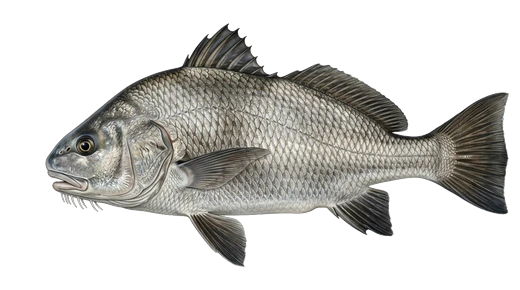
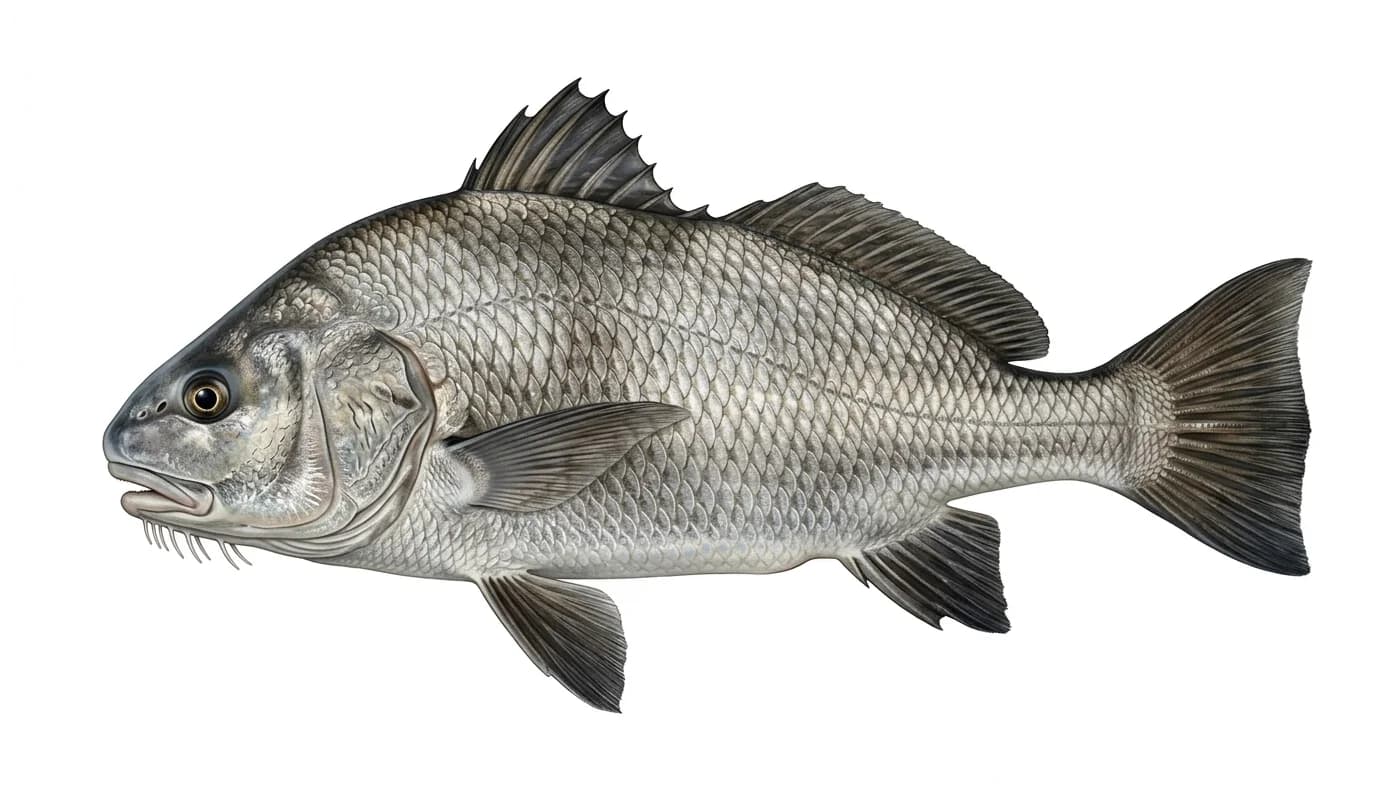
The black drum is a large saltwater fish belonging to the drum family.
Out of season · starts in NovemberWhere to fish

Season
- Off
- In season
Tap it to see it in 3DClick it to see it in 3D
The muscle of the coast
Every black drum (corvina negra) you post with a photo counts toward your Pesquedex. Bronze comes with the first catch; silver and gold ask for a variety of spots and provinces.
Recent Black drum (corvina negra) catches
Nobody has posted a black drum (corvina negra) report yet. Post yours with a photo: you get the catch card and the bronze medal.
Be the first →Habitat
The black drum is a coastal and estuarine species: it prefers shallow to moderate waters over soft sand and mud bottoms, where the mollusks and crustaceans that form the base of its diet are abundant. In Argentina it is targeted mainly along the Buenos Aires coast and the area influenced by the Rio de la Plata, in open beaches, jetties, piers, channels and above all in the river mouths and estuaries where fresh water mixes with salt. That nutrient-rich brackish mix is its favorite habitat and tends to hold the largest schools.
To locate it, it pays to read the bottom structure: the black drum patrols mussel beds, shell remains, crab flats, deep holes and channels between sandbars, where it finds food and shelter. On the beach, look for changes in depth, the troughs running parallel to the shore and the drop-offs where the waves break, because that is where it patrols in search of food stirred up by the surf. Near jetties and breakwaters, the gaps between rocks and the holes at the foot of the structure are classic spots.
As for timing, the best season runs from November to March, coinciding with the warmest summer waters and with the species' spawning concentration, which gathers the big fish in the estuaries. Tides carry enormous weight: the flood and ebb movements, and especially the hours around the tide change, are what switch on the feeding. Slightly murky or "loaded" water after a storm often improves the fishing a great deal, because the drum grows confident and moves in close to shore.
Baits and lures
The black drum is a bottom feeder specialized in shelled and fleshy prey, so fresh natural baits are the main weapon. Options that work well in Argentina:
- Clam and mussel (in and out of the shell): one of the top baits. The black drum has pharyngeal teeth to crush mollusks, and the smell of an opened clam is a magnet, especially for the big fish.
- Crab (whole, cut or peeled): a classic natural bait in estuaries and crab flats, very selective for large fish.
- Shrimp and prawn: excellent for their scent and their natural presence in the estuarine environment.
- Fillet or strip of fresh fish (for example mullet or similar): good for covering water and holding up on the hook against bait-stealing species.
- Sea worm / bloodworm: it works, especially for medium-sized fish and for "calling in" activity.
Recommended gear
The black drum is a large fish with a powerful bottom fight, so the tackle needs to be more than enough to stop head shakes and pull it out of structure without getting cut off. A typical setup, adaptable to the environment:
From shore (surfcasting / jetty):
- Rod: surfcasting rod of 3.60 to 4.20 m, medium to medium-heavy power, capable of casting 100 to 200 g sinkers. For jetties and nearby holes you can drop down to a shorter, sturdier rod.
- Reel: a good-sized spinning or conventional reel with a smooth, reliable drag and generous line capacity. The drag must be smooth but firm to withstand the initial run of a big fish.
- Main line: high-strength braid (for its smaller diameter and better sensitivity to read the bottom) or sturdy monofilament if you prefer something more forgiving against abrasion.
- Leader: fluorocarbon or thick monofilament leader that resists abrasion (well above the strength of the main line), designed for the rub against shell, mussel and rock. If you fish over sharp structure, don't skimp on the leader.
- Hooks: sized to match the species' large mouth, strong and with a good point, circle or heavy-shank type, suitable for clam, crab or fillet baits.
- Sinker: pyramid or grip type to dig into the sand and hold against the current; adjust the weight to the tide and the surf.
Boat / estuary:
- A shorter, more powerful rod (boat or heavy bottom rod), a reel with good capacity and drag, and sturdy rigs. Adjust the weight to the minimum needed to keep the bait on the bottom according to the drift and current.
As a general rule: leader and drag are what you cannot neglect with this species. A fish of over 40 kg won't forgive a loose knot or a worn leader.
Fishing techniques
The prime method for the black drum is bottom fishing, whether from shore (beach, jetty, pier) or from a boat or drifting in estuaries and channels. It is a fish that feeds hard on the bottom, so the whole game is about presenting the bait well on the bottom and detecting the bite.
From shore (surfcasting / beach fishing):
- Look for structure: troughs, drop-offs, holes or the foot of a jetty. Read the beach at low tide to know where to cast when the water rises.
- Rig a bottom line with a sinker matched to the current (often pyramid or "grip" type so it holds in the sand) and a sturdy leader.
- Cast to the trough or drop-off and keep the line semi-taut to "feel" the bottom and the bite.
- The black drum usually gives a firm bottom bite, sometimes preceded by little taps; it pays to give it a moment to take the bait properly and set the hook with a firm sweep, not a violent jerk.
Boat / drifting in the estuary:
- Anchored over mussel beds or crab flats, or on a controlled drift crossing channels, presenting the bait near the bottom.
- The tide change is the key moment: be ready for the activity to spike in that window.
Guide tips:
- The tides rule. Plan the outing around the tide change and the hours of greatest water movement. Dawn, dusk and night are usually better than midday.
- Loaded water = a good sign. After a storm or with somewhat murky water, the drum moves in close and grows confident.
- Hold firm tackle. A big fish puts up a powerful bottom fight with head shakes; don't give it an edge by feeding too much line or forcing a premature hookset.
- Listen for the "croak." In peak season, the characteristic drumming underwater gives away active schools.
- Refresh the bait. Against bait-stealing species, check and refresh often to always have fresh scent on the bottom.
Closed season & regulations
Closed seasons, minimum size and bag limits for black drum (corvina negra) are set by each province and change every year. The current rule is on each spot's page: confirm it before heading out.
Read the full note
The black drum is a species that breeds by concentrating in the estuaries during the warm months, precisely when it is fished the most. That is why understanding and respecting the regulations is not a formality: it is what allows the big fish to keep showing up season after season.
Why the closed season exists. A closed season (veda) is a period (or a zone) where fishing is restricted or banned to protect fish during their breeding time, when they are more vulnerable because they gather to spawn. Respecting it protects the future of the fishery. In large, relatively slow-growing species like the black drum, the biggest fish are also the most valuable breeders, so protecting them has a direct impact on the health of the population.
Catch and release. With big black drum, the catch-and-release culture is well worth it: a trophy fish contributes more alive, reproducing, than in the cooler. If you are going to release it, handle the fish with wet hands, minimize time out of the water, avoid injuring the gills and revive it before letting it go. Take the photo quickly and release it.
The most important and honest point: the closed season, the legal minimum size and the daily catch limit VARY BY PROVINCE AND BY YEAR, and can change from one season to the next. There is no single number valid for the whole country. Before heading out, consult the official provincial authority for the area where you will fish (for example the province's Fisheries, Wildlife or Natural Resources department, or the relevant enforcement authority), and check the regulations in force for that season. It is also usually necessary to hold the corresponding fishing permit or license. When in doubt, ask at the local fishing club or the fisheries warden: official, up-to-date information is the only valid source.
Shops & clubs in the area
Ready to chase black drum (corvina negra)? Find guides who target this species and message them.
Plan your trip hereDo you guide black drum (corvina negra) trips? Join for free and show up here →
Read before you go
Frequently asked questions about black drum (corvina negra)
Can you fish for Black drum (corvina negra) right now, in October?
In October black drum (corvina negra) is out of season. Its best time is dec–feb. Being out of season does not mean there is a closed season: that is set by each province and shown on every spot page.
What's the best time to fish Black drum (corvina negra)?
The best time for black drum (corvina negra) is dec–feb. Check each place's page for the bite calendar and to respect current closed seasons.
Where can you fish Black drum (corvina negra) in Argentina?
Some of the best places to fish black drum (corvina negra) are Bahía San Blas, Laguna Mar Chiquita (Costa Atlántica), San Clemente del Tuyú, Boca del riacho Pilagá. On PESQA you get the map, access info, seasons and verified guides for each one.